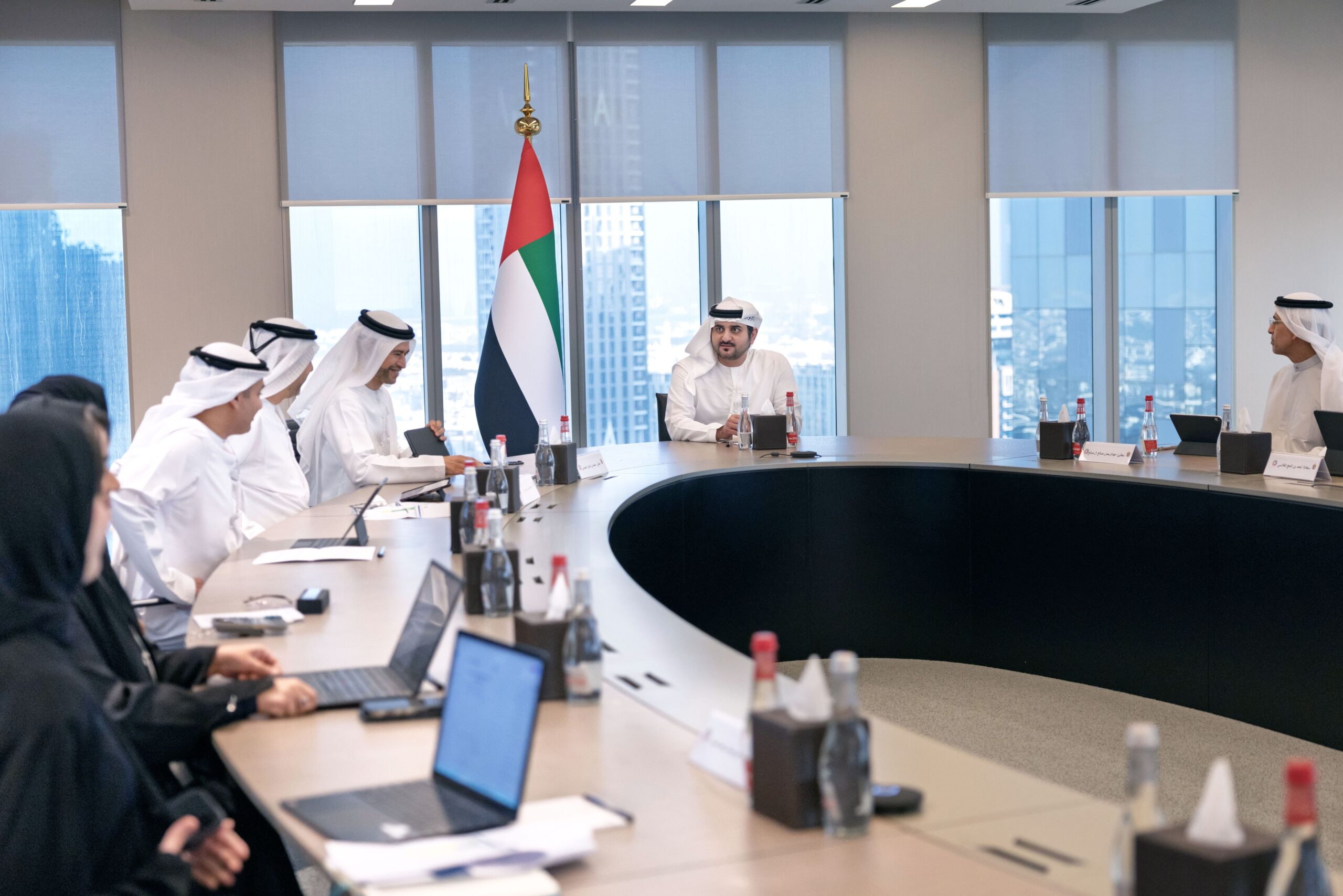
His Highness Sheikh Maktoum bin Mohammed bin Rashid Al Maktoum, First Deputy Ruler of Dubai, Deputy Prime Minister and Minister of Finance of the UAE, and Chairman of the Federal Tax Authority (FTA), chaired a meeting of the Authority’s Board of Directors to review key developments and future plans.
During the meeting, His Highness reviewed progress on initiatives aimed at enhancing operational systems, expanding digital transformation, adopting more efficient business models, and delivering proactive services that support continuous improvement in quality of life. These efforts align with the leadership’s vision to strengthen the role of the tax system in supporting financial sustainability and boosting the UAE’s global competitiveness.
The meeting also covered the Authority’s Artificial Intelligence strategy, with His Highness directing the wider use of AI technologies to improve efficiency and simplify tax procedures through smart, AI-powered services.
Sheikh Maktoum was briefed on the FTA’s recent performance results and key indicators, as well as its operational and development roadmap for the next phase. He praised the Authority’s strong performance and its contribution to national economic diversification by managing and collecting federal taxes in line with international best practices.
A detailed report presented during the meeting showed a significant increase in tax registrations, with around 710,000 Corporate Tax registrants and approximately 573,000 VAT registrants. Excise Tax registrants reached 1,767, while the number of registered tax agents stood at 899.
The report also highlighted that VAT refunds approved for UAE nationals on newly built homes reached AED 94.44 million by January 2026. In addition, the Authority achieved notable progress in reducing bureaucratic procedures by implementing 75 initiatives during the second cycle of the Digital Zero Bureaucracy Programme, compared to 29 initiatives in the first cycle, further enhancing service efficiency and customer experience.