
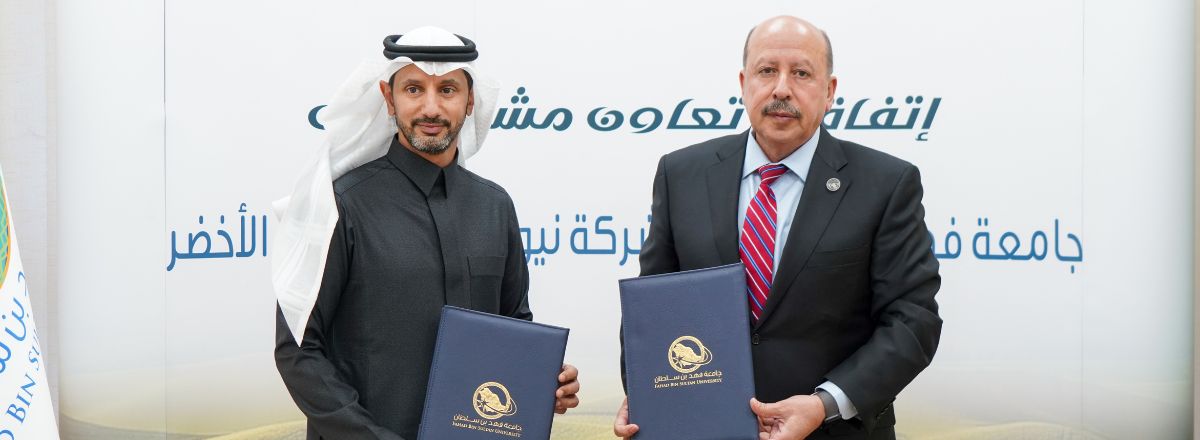
NEOM Green Hydrogen Company (NGHC) has entered into a strategic partnership with Fahad Bin Sultan University in Tabuk, marking a significant step toward strengthening local talent and research capabilities in Saudi Arabia’s emerging clean energy ecosystem.
The collaboration, formalized through a three-year Memorandum of Understanding, establishes a structured framework for cooperation across education, applied research, and workforce development. The initiative is designed to equip students and early-career professionals with specialized skills aligned with the Kingdom’s rapidly expanding hydrogen and renewable energy sectors.
As Saudi Arabia accelerates its transition toward a knowledge-based economy under Vision 2030, the partnership reflects a growing emphasis on linking academic institutions with large-scale industrial projects. By fostering closer engagement between NGHC and the university, the agreement aims to bridge the gap between theoretical learning and real-world operational demands.
The collaboration will focus on joint research initiatives, training programs, internships, and knowledge exchange, creating new opportunities for local graduates to gain exposure to advanced clean energy technologies. It also supports the development of a sustainable talent pipeline in the Tabuk region, reinforcing its role as a strategic hub for next-generation energy projects.
For NGHC, the partnership comes at a pivotal stage. As the company transitions from construction to testing, commissioning, and operational readiness, building strong national capabilities has become a priority. Investing in local expertise is seen as essential not only for long-term operational excellence, but also for ensuring the resilience and scalability of one of the world’s most ambitious green hydrogen projects.
The agreement underscores NGHC’s broader commitment to localization, innovation, and human capital development, while positioning Fahad Bin Sultan University as a key contributor to the Kingdom’s clean energy ambitions.
By aligning academic resources with industry needs, the partnership highlights how strategic collaboration can accelerate skills development, drive innovation, and support Saudi Arabia’s leadership in the global energy transition.